
Where Are You?
Genesis 3
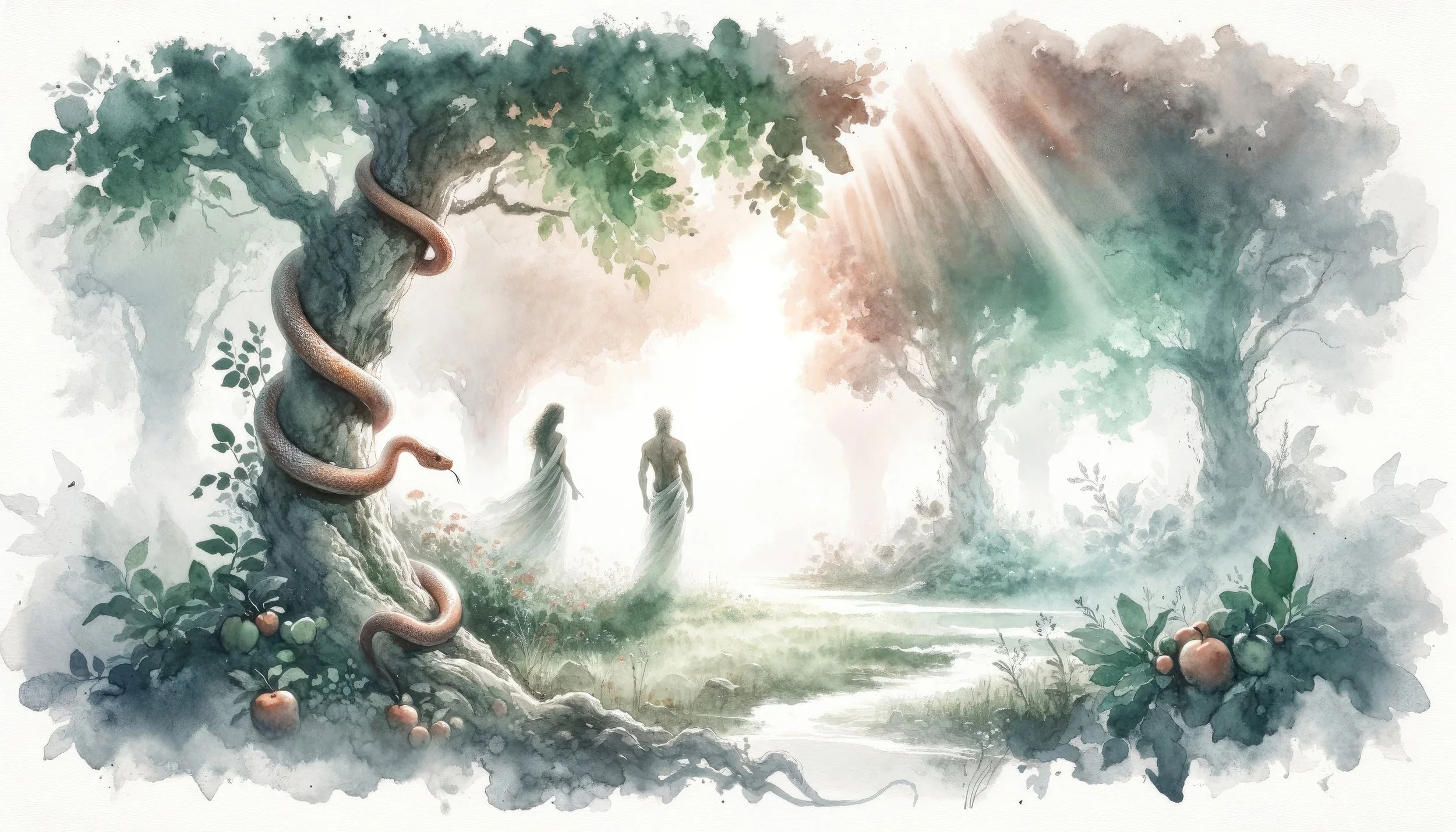
“Did God really say…?”
The serpent does not storm the garden or deny God outright. He nudges. He reframes. He takes what God said and bends it just enough to make trust feel optional. Temptation rarely sounds like open defiance. It usually sounds like curiosity dressed up as wisdom. And it often starts by suggesting that God might be holding out.
The woman listens. She remembers the command, mostly—but adds to it. “Neither shall you touch it.” God never said that. When God’s Word is altered, even slightly, obedience becomes fragile. God’s generosity begins to look restrictive, and boundaries start to feel suspicious.
The fruit looks good. Desirable. Promising. Sin rarely advertises itself as destructive. It presents itself as reasonable. Necessary, even. The choice is made, the fruit is eaten, and immediately something changes in the humans.
Their eyes are opened, but not in the way they hoped.
Instead of wisdom, they feel exposed. Instead of freedom, they feel vulnerable. The first thing humanity does after sinning is reach for cover. Fig leaves become the world’s first attempt at self-repair—thin, scratchy, and ultimately ineffective. Shame always rushes in faster than repentance.
Then comes one of the most tender moments in Scripture.
God walks in the garden.
Not with thunder. Not with punishment already prepared. God comes walking, calling out, “Where are you?” That question is not about location. God knows exactly where they are. It is an invitation, not an interrogation. God does not wait for humans to find their way back. He moves toward them first.
Adam answers, “I was afraid.” Fear enters the vocabulary of humanity, followed closely by blame. The man blames the woman. The woman blames the serpent. Responsibility slides downhill quickly. Sin fractures trust in every direction—toward God, toward others, and even toward ourselves.
God speaks words of judgment, and they are real. The ground will resist. Relationships will strain. Life will become harder than it was meant to be. Genesis 3 never minimizes the cost of sin. But judgment is not the final word in the chapter.
Before Adam and Eve leave the garden, God does something unexpected. He makes clothing for them.
Not fig leaves. Something sturdier. Something lasting.
God covers what shame exposed. He does for them what they could not do for themselves. Grace arrives before the exile even begins. The first humans leave Eden clothed by God himself.
And woven into God’s words to the serpent is a promise—quiet but decisive. Evil will not have the last word. One will come who will be wounded but victorious. The fracture introduced here will not go unhealed forever.
Genesis 3 explains far more than how sin entered the world. It explains why we hide, why we deflect blame, why we struggle to trust God when his commands feel costly. But it also shows us who God is when trust collapses.
He comes looking.
He speaks truth.
He covers shame.
He promises restoration.
If you find yourself hiding today—behind excuses, busyness, or carefully stitched-together fig leaves—hear the question beneath the question. “Where are you?” is not condemnation. It is grace calling you back into the open.
God already knows what you did.
He already sees where you are.
And he is still walking toward you.
The story of Scripture does not move away from this garden moment. It moves deeper into it—toward a God who refuses to abandon a broken creation, and who, again and again, chooses to cover what we cannot.
Even when trust fractures, God still comes looking.
MICHAEL WHITWORTH is the author of 40+ books and commentaries exploring the depth and wonder of Scripture. A graduate of Freed-Hardeman University, he preaches for the Newport Avenue Church of Christ in Bend, Oregon. When he isn’t writing, he finds joy in simple things—reading a good book, capturing landscapes through his camera lens, or guzzling coffee (with a jar of M&Ms close by).
