 Image 1 of 1
paperback, 21 chapters, 234 pages
A boy stands in the surf, baptizing his friends in the Mediterranean Sea. He is ten years old. He is not playing.
Bishop Alexander sees the boy from the shore road and recognizes something rare: a child who believes every syllable of the faith he is performing. He takes the boy into his household, gives him the Scriptures, and watches him become the sharpest theological mind in Egypt.
But the faith is under attack from within. A charismatic preacher named Arius is setting a dangerous idea to music—that Christ is not truly God but a creature, the highest and most glorious being God ever made, but a creature nonetheless. The songs are beautiful. The songs are everywhere. And the idea inside them threatens to undo the gospel from the inside out: if Christ is a creature, then God did not come. And the distance between God and humanity remains uncrossed.
At the Council of Nicaea in 325 AD, three hundred bishops gather to answer the question. A young deacon named Athanasius—with no vote, no seat, and no patience for compromise—fights for the word that will hold the faith together: homoousios. Of the same substance. Not similar. The same. The creed is written. The bishops sign. The victory is overwhelming.
It is also fragile. Within a decade, the signatures begin to fail. Emperors who want unity more than truth pressure the bishops to soften the creed, to replace "same" with "similar," to let the distance between God and humanity quietly reopen. One by one, the bishops who signed at Nicaea sign other documents—compromise formulas that sound close enough and cost nothing and surrender everything.
Athanasius refuses. He becomes Bishop of Alexandria at thirty. He is exiled five times by four different emperors. Soldiers raid his church during a midnight service. Athanasius contra mundum. Athanasius against the world. The phrase was not a boast. It was a diagnosis. The world moved. He did not.
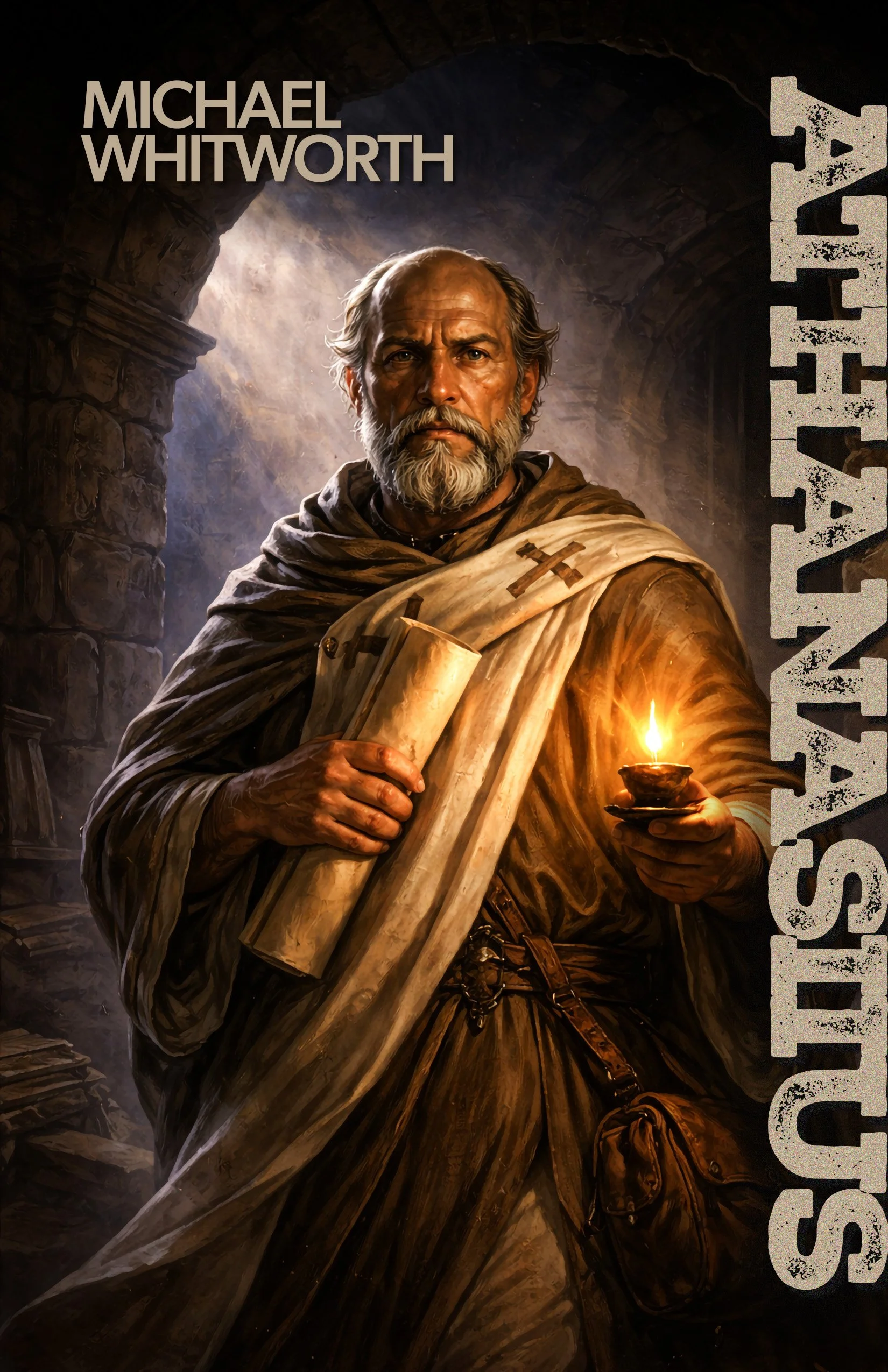
Athanasius: Against the World is the story of one man's forty-five-year fight to preserve the central claim of Christianity: that God himself entered the world in the person of Jesus Christ. It is a story about courage and stubbornness and the razor-thin line between the two. It is a story about the difference between one letter of the Greek alphabet—the smallest letter, an iota—and why that difference matters more than empires. It is a story about a faith that was held not only by the bishop who defended it in councils but by the ordinary people who held it in their prayers when the bishop was in exile and the councils had failed.
And it is a story about fire—the fire of the lighthouse that marked the harbor of Athanasius's childhood, the fire of the songs that carried a heresy through the streets, the fire in a desert cave where an old monk prayed in the dark, and the fire of a creed that two billion Christians still speak every Sunday in every language on earth, because a boy stood in the surf and believed every syllable, and the man he became never stopped.
A novel of historical fiction set in the fourth-century Roman Empire. For readers who love stories about people who hold the line when the line is all that's left.
paperback, 21 chapters, 234 pages
A boy stands in the surf, baptizing his friends in the Mediterranean Sea. He is ten years old. He is not playing.
Bishop Alexander sees the boy from the shore road and recognizes something rare: a child who believes every syllable of the faith he is performing. He takes the boy into his household, gives him the Scriptures, and watches him become the sharpest theological mind in Egypt.
But the faith is under attack from within. A charismatic preacher named Arius is setting a dangerous idea to music—that Christ is not truly God but a creature, the highest and most glorious being God ever made, but a creature nonetheless. The songs are beautiful. The songs are everywhere. And the idea inside them threatens to undo the gospel from the inside out: if Christ is a creature, then God did not come. And the distance between God and humanity remains uncrossed.
At the Council of Nicaea in 325 AD, three hundred bishops gather to answer the question. A young deacon named Athanasius—with no vote, no seat, and no patience for compromise—fights for the word that will hold the faith together: homoousios. Of the same substance. Not similar. The same. The creed is written. The bishops sign. The victory is overwhelming.
It is also fragile. Within a decade, the signatures begin to fail. Emperors who want unity more than truth pressure the bishops to soften the creed, to replace "same" with "similar," to let the distance between God and humanity quietly reopen. One by one, the bishops who signed at Nicaea sign other documents—compromise formulas that sound close enough and cost nothing and surrender everything.
Athanasius refuses. He becomes Bishop of Alexandria at thirty. He is exiled five times by four different emperors. Soldiers raid his church during a midnight service. Athanasius contra mundum. Athanasius against the world. The phrase was not a boast. It was a diagnosis. The world moved. He did not.
Athanasius: Against the World is the story of one man's forty-five-year fight to preserve the central claim of Christianity: that God himself entered the world in the person of Jesus Christ. It is a story about courage and stubbornness and the razor-thin line between the two. It is a story about the difference between one letter of the Greek alphabet—the smallest letter, an iota—and why that difference matters more than empires. It is a story about a faith that was held not only by the bishop who defended it in councils but by the ordinary people who held it in their prayers when the bishop was in exile and the councils had failed.
And it is a story about fire—the fire of the lighthouse that marked the harbor of Athanasius's childhood, the fire of the songs that carried a heresy through the streets, the fire in a desert cave where an old monk prayed in the dark, and the fire of a creed that two billion Christians still speak every Sunday in every language on earth, because a boy stood in the surf and believed every syllable, and the man he became never stopped.
A novel of historical fiction set in the fourth-century Roman Empire. For readers who love stories about people who hold the line when the line is all that's left.