
When God’s Heart Breaks
Genesis 6:1–8
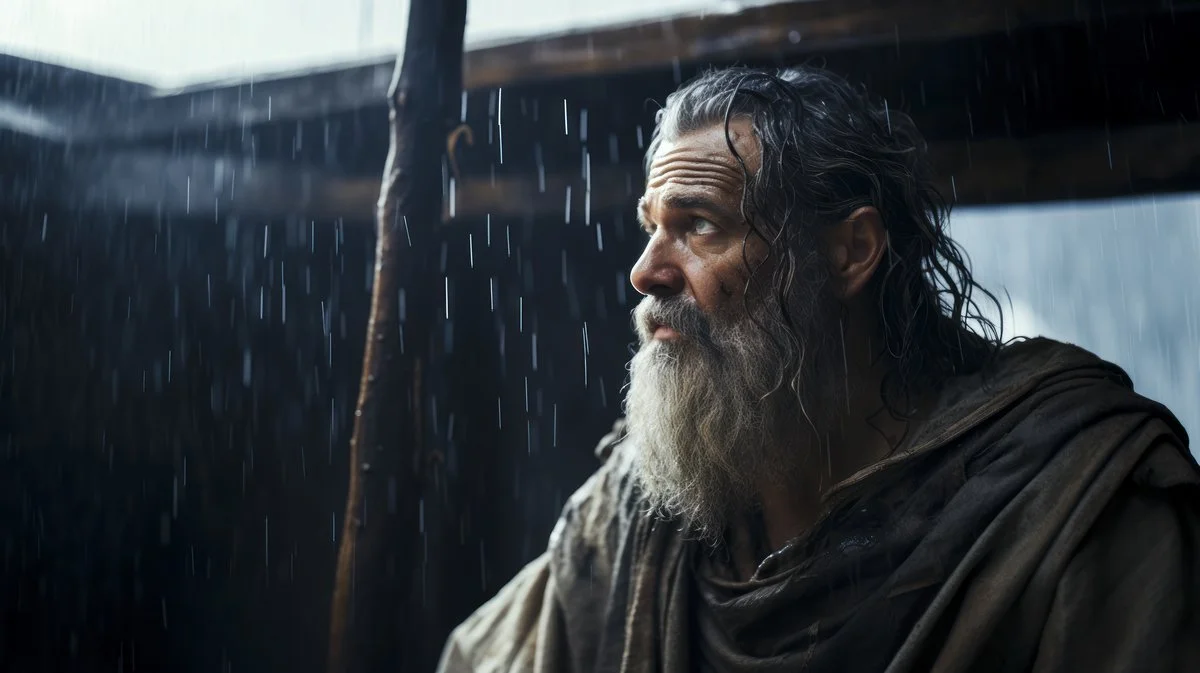
The opening of Genesis 6 is one of those passages that feels heavy the moment you read it. The language is unsettling. The details are strange. And at the center of it all is a sentence we are not quite sure what to do with: “The Lord regretted that he had made man on the earth, and it grieved him to his heart.”
Before we wrestle with the mysterious phrases—the “sons of God,” the Nephilim, the long ages and shortened days—we need to notice something simpler and far more sobering. God looks at the world he made and sees that violence, corruption, and self-assertion have become the norm. What began as mistrust in the garden has spread everywhere. Sin is no longer crouching at the door; it has moved in and rearranged the furniture.
The language about the “sons of God” and human women has fueled centuries of debate. Scripture does not pause to satisfy our curiosity. Whatever the precise identity of these figures, the point is clear: boundaries God set for human flourishing are being ignored. Power is being abused. Desire is unchecked. Humanity is reaching for more than it was meant to take. Once again, the problem is not curiosity—it is autonomy.
Then God speaks, and his words are not angry so much as weary. Human life will now be limited. Time itself becomes a mercy. Endless rebellion would only magnify harm. God’s response is restraint, not indulgence.
And then we hear it: God is grieved.
That does not mean God made a mistake in the way humans make mistakes. Scripture is not portraying a divine panic or a change of plans gone wrong. It is revealing something relational. God is not distant from the mess of the world; he is affected by it. The same God who breathed life into humanity now feels sorrow over what that life has become.
Some people imagine God as permanently disappointed, arms crossed, waiting to say “I told you so.” Genesis 6 shows something very different. God is not detached from human sin; he is wounded by it. Violence grieves him. Corruption pains him. The brokenness of the world is not something he shrugs off.
And yet—even here—judgment is not the final word.
Verse 8 interrupts the darkness like a small light in a long tunnel: “But Noah found favor in the eyes of the Lord.”
That word “favor” is important. Noah does not earn it. He finds it. Grace is already at work before the flood ever begins. In a world bent toward destruction, God chooses to preserve. While judgment is real and coming, grace quietly arrives first.
This pattern matters for how we read the rest of Scripture—and how we understand our own lives. God does not ignore evil. He does not pretend violence and injustice do not matter. But neither does he abandon the world to itself. Even when grief fills his heart, God is already preparing redemption.
Genesis 6:1–8 reminds us that sin is never merely personal. It shapes cultures. It corrodes communities. It affects the world God loves. But it also reminds us that God’s grief is the flip side of his care. He is not indifferent because he is invested.
If you ever wonder whether your choices matter to God, this passage answers yes—deeply. If you ever wonder whether the brokenness of the world troubles him, the answer is yes—personally. And if you ever fear that judgment means God has given up, verse 8 stands quietly to say otherwise.
Even in a world headed toward the flood, grace has already begun to speak.
God’s heart can be grieved.
God’s patience can be tested.
But God’s purpose does not disappear.
Sometimes hope arrives not with thunder, but with a single sentence that refuses to be drowned out:
“But Noah found favor in the eyes of the Lord.”
MICHAEL WHITWORTH is the author of 40+ books and commentaries exploring the depth and wonder of Scripture. A graduate of Freed-Hardeman University, he preaches for the Newport Avenue Church of Christ in Bend, Oregon. When he isn’t writing, he finds joy in simple things—reading a good book, capturing landscapes through his camera lens, or guzzling coffee (with a jar of M&Ms close by).
